The documentaries that hold our attention start with something real: a person with a story, a turning point, or a question worth exploring. For businesses and organizations in New York’s Capital District, that same approach can turn a company history, a founder’s journey, or a community initiative into a film people want to watch.
When we say “Netflix-style,” we mean the cinematic feel and thoughtful storytelling audiences associate with premium documentaries. It describes a creative approach, without implying a Netflix affiliation or distribution agreement.
Start with a story worth telling
A strong documentary goes beyond a list of services. It asks what happened, why it mattered, and who was changed by it. An Albany business might explore the decision that reshaped its future. A Troy manufacturer might follow the people carrying a craft forward. A Schenectady nonprofit might show the human story behind its mission.
The goal is to give viewers a reason to care before asking them to take action. Specific memories, honest interviews, and moments of everyday work can say more than a polished sales pitch.
Build the look around the people
Cinematic interviews begin with an environment that supports the story. Location, lighting, composition, and background details all influence how an interview feels. A workshop, office, studio, or historic building can bring context to the frame.
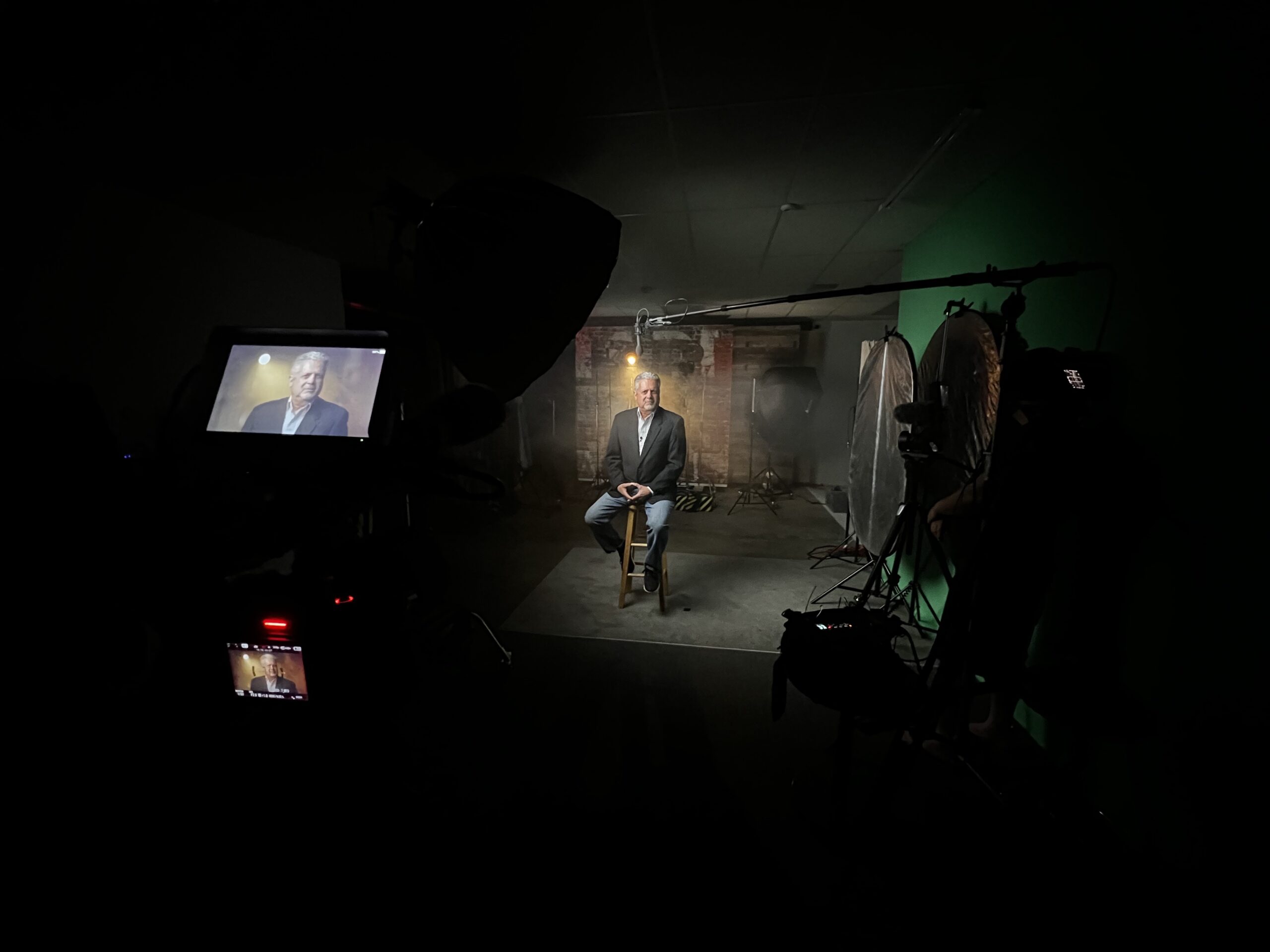
The behind-the-scenes photograph featured with this article shows how those elements come together: a seated interview subject, a cinema camera, shaped lighting, and a boom microphone positioned above the scene. The equipment serves a simple purpose—helping the audience focus on the person speaking.
Let viewers see the story unfold
Interviews provide perspective, but the film also needs life beyond the interview chair. Footage of people at work, meaningful places, archival photographs, and details of a process can connect what someone says with what the audience sees.
Across Albany, Troy, Schenectady, and the surrounding Capital District, a film can draw its visual identity from the places and people at the heart of its subject. The strongest location choices come from the story itself.
Sound and editing make the difference
Clear dialogue is essential. Careful microphone placement and attention to room noise help preserve the small details in a voice. Natural sound can make a workplace or location feel present, while thoughtfully chosen music supports the emotion of a scene.
In the edit, pacing gives those pieces shape. An effective opening creates curiosity. Each section develops the story, and the ending leaves viewers with something to remember. The final length should serve the material and the audience, whether the project becomes a short brand documentary or a longer film.
Plan a documentary around your goals
Planning documentary production in the Capital District starts with a clear brief. Use this checklist before your first production conversation:
- Audience: Who should watch, and what should they understand afterward?
- Story: What central question, challenge, or turning point will the film explore?
- People: Who can share firsthand experiences and specific memories?
- Materials: What photographs, documents, or archival footage are available, and who owns the rights?
- Locations: Which settings support the story, and what filming permissions are needed?
- Delivery: Where will the film appear, and will you need captions or shorter versions?
Explore JGI Media’s video services for production options and post production services for the editing stage. Discuss music licensing and release forms before the shoot.
A main film can also be planned alongside shorter excerpts for a website, social channels, presentations, or events. Thinking about those uses early helps the production capture what each version needs.
Questions about documentary production in the Capital District
Does Netflix-style mean the film will be on Netflix?
No. Here, the phrase describes a cinematic storytelling approach. Streaming distribution is a separate process and is not promised as part of a production.
What affects the cost of a documentary?
Interview count, filming days, travel, archival licensing, crew requirements, and editing complexity all affect the scope. Share your goals and available materials so a production proposal can reflect the actual project.
How can we prepare interview subjects?
Explain the story’s purpose and discuss themes beforehand. Encourage people to recall specific moments in their own words rather than memorize a script. Leave time for follow-up questions.
Tell your Capital District story with JGI Media
Your organization’s most compelling story may already be there—in the people, choices, and experiences that shaped it. A documentary approach creates room to explore that story with care and give it a cinematic presentation.
Have a story in mind? Contact JGI Media to discuss a documentary project in the Capital District.